Gilbert Pool Tile Cleaning
Pool Tile Cleaning and Replacement in Gilbert, AZ
Calcium scale taken off the waterline, and new tile when cleaning isn't enough.
Gilbert Pool Tile Cleaning
Calcium scale taken off the waterline, and new tile when cleaning isn't enough.
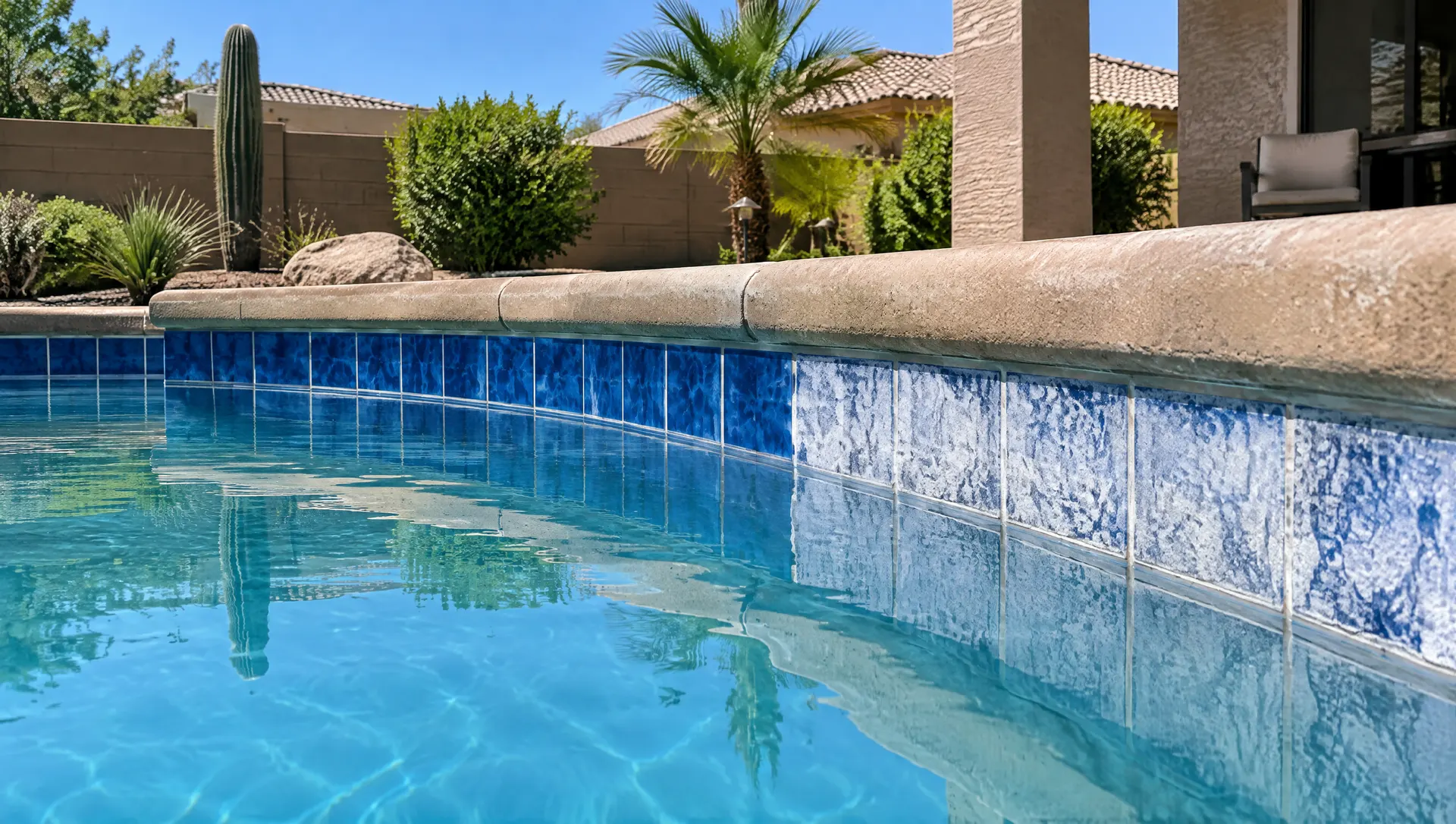
The white crust on your waterline is calcium left behind as pool water evaporates. In the Arizona sun that cycle runs every day, and the crust builds in layers.
Scrubbing and pumice stones handle light scale. Thick deposits need bead blasting, which uses a fine, low-pressure media to knock off the calcium without cutting into the tile glaze.
If the tile underneath is cracked, loose or hollow, cleaning won't fix it. That's when a new waterline band makes more sense, and it's a chance to change the look of the pool.
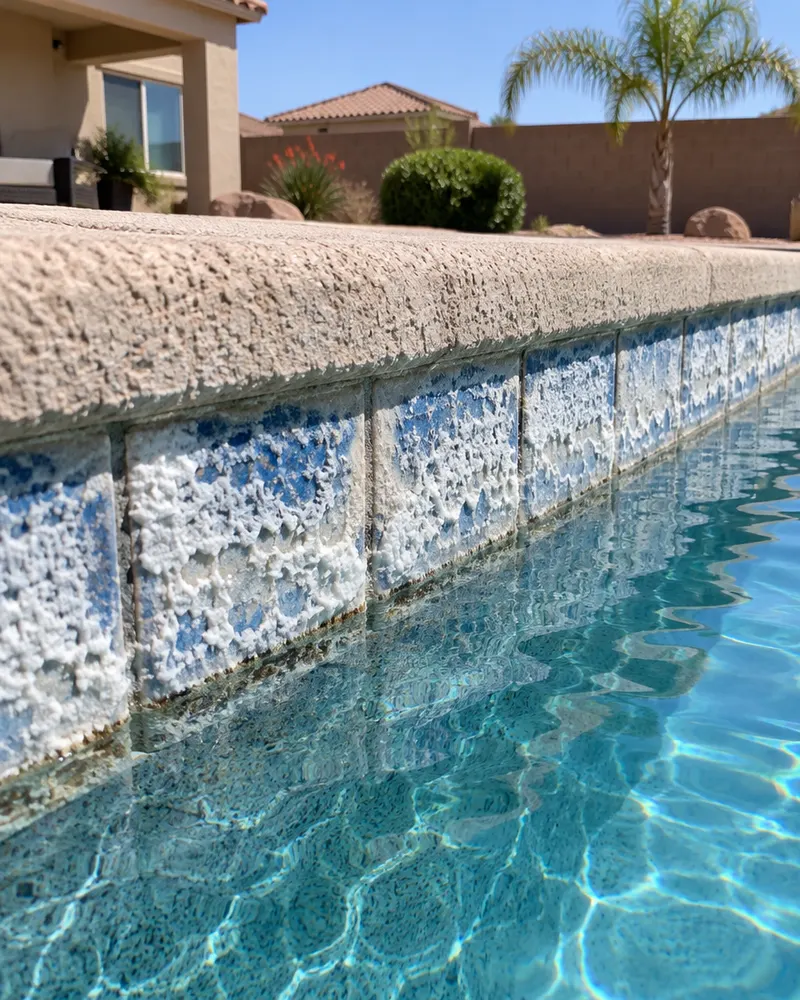
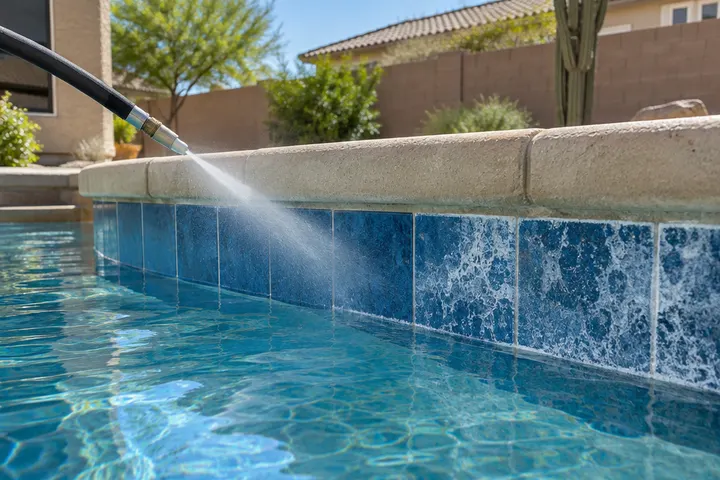
Water lowered below the tile line, then calcium blasted off with fine media.
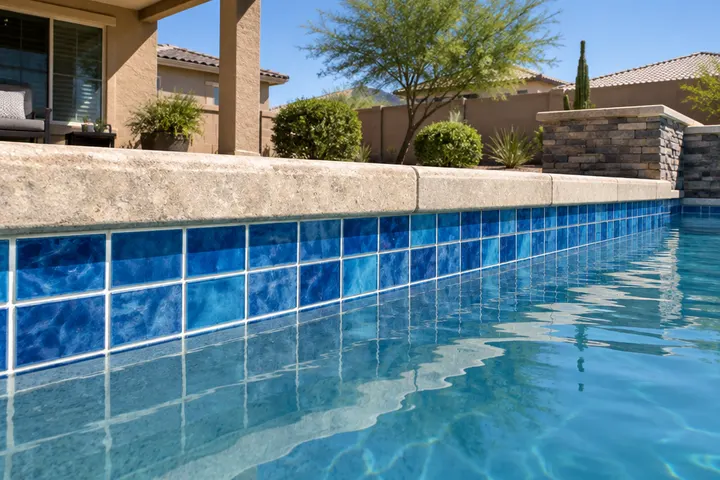
Glaze and grout lines back in view once the scale is gone.
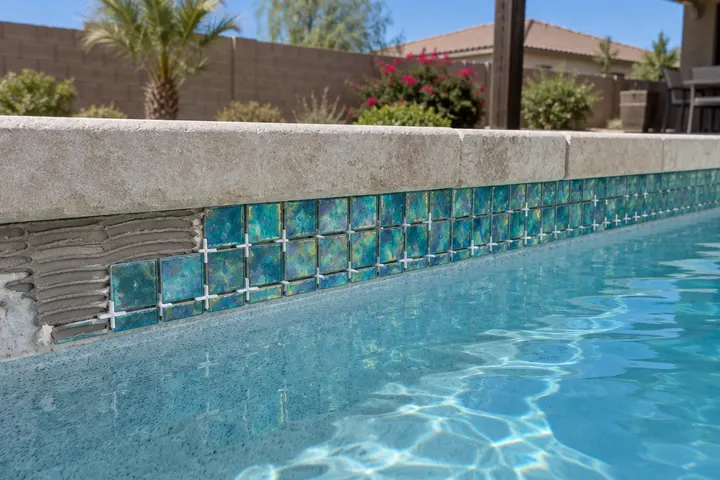
Glass or porcelain tile set when the old band is failing.
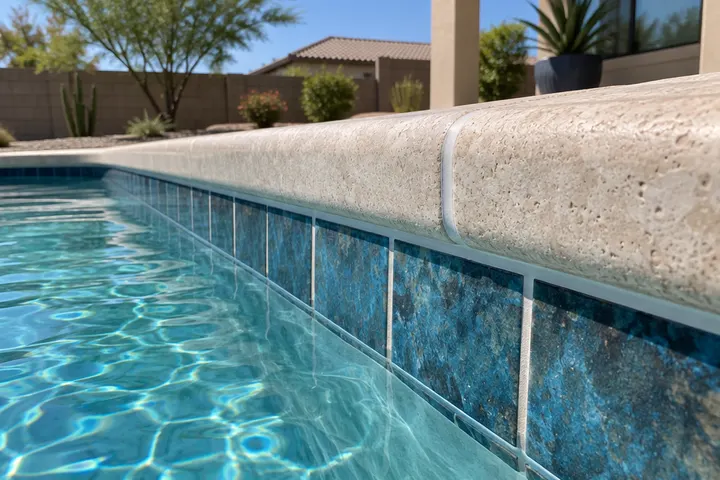
Fresh grout and a flexible joint where tile meets coping.
| Condition | Best fix | Why |
|---|---|---|
| Light white film | Hand cleaning | Comes off without lowering the water much |
| Thick, layered calcium | Bead blasting | Removes scale without scratching the glaze |
| Cracked or loose tiles | Spot replacement or new band | Cleaning can't reattach tile |
| Dated or discontinued tile | New waterline band | Patches rarely match old tile |
It depends on your water and how often the pool is topped off. Many owners schedule bead blasting every couple of years once scale starts to show.
Not when it's done with the right media and pressure. It removes the calcium and leaves the tile glaze intact.
No. We lower the water a few inches below the tile line and refill when we're done.
Yes, if matching tile is available. With older pools it often isn't, so we'll show you both a spot repair and a new band.
Send us a photo of your waterline or tell us how thick the white crust is. We'll recommend cleaning or new tile.
Free estimate, no obligation